
Why Croatia Is the Most Underrated Luxury Destination in Europe Right Now
The people who've been look at you differently when you say you've never gone. Like they know something. They do.
Everyone is going to Italy. Everyone is going to France. And both of those places are extraordinary — no argument there. But there's a reason the people who've been to Croatia look at you differently when you say you've never gone. Like they know something you don't. Like they're deciding whether to tell you.
They are. And we're telling you.
Croatia's Dalmatian Coast is one of the most quietly spectacular stretches of coastline in the world. The water is the kind of blue that makes you wonder if the photos are edited — they're not. The islands are ancient and unhurried. The food is extraordinary in the way that only happens when a place hasn't had to perform for tourists yet. And compared to Italy, France, or Greece? The experience still has room to breathe.
That window is closing. Here's why you should move now — and why you should do it right.
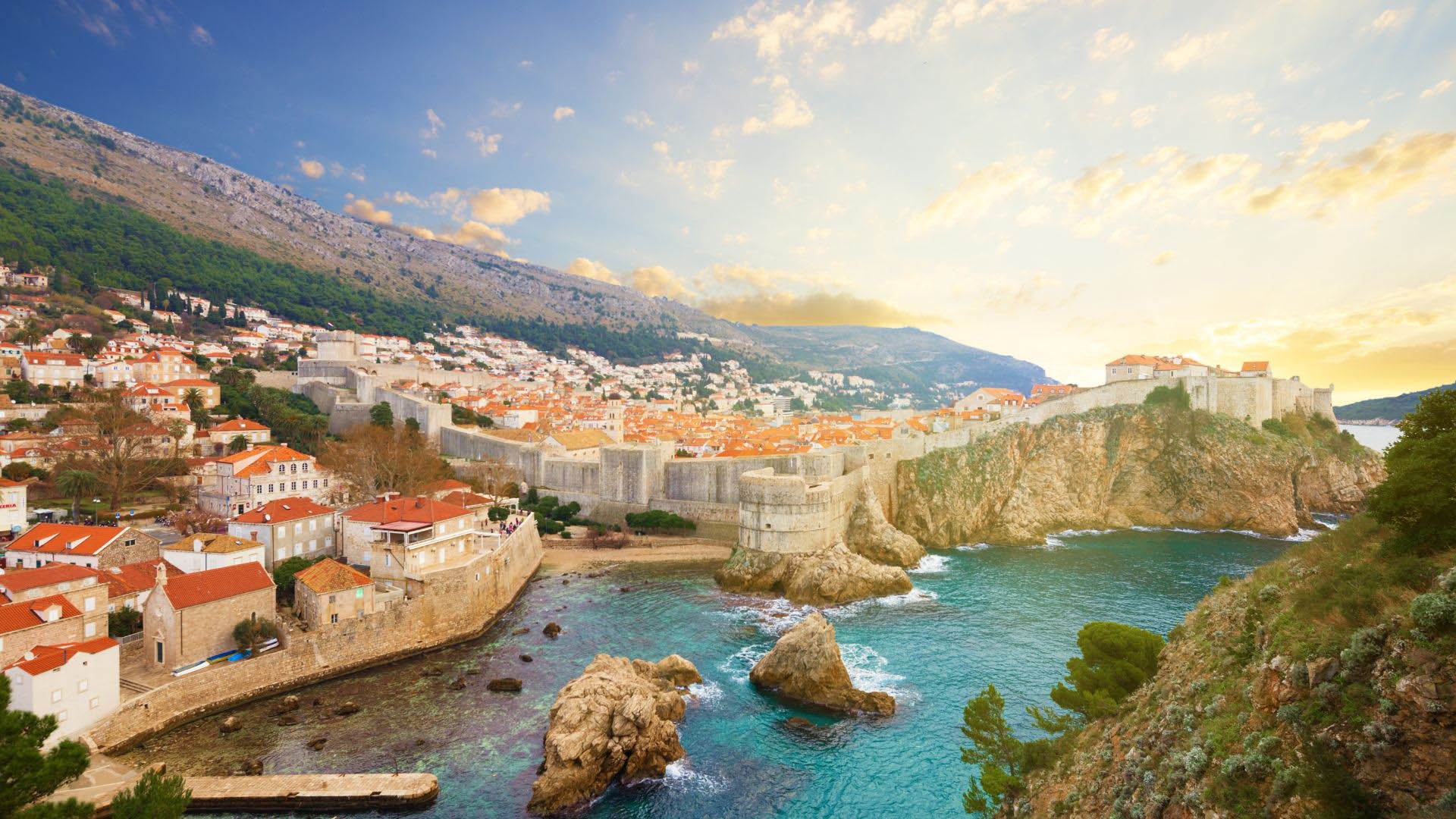
The Water Alone Is Worth the Flight
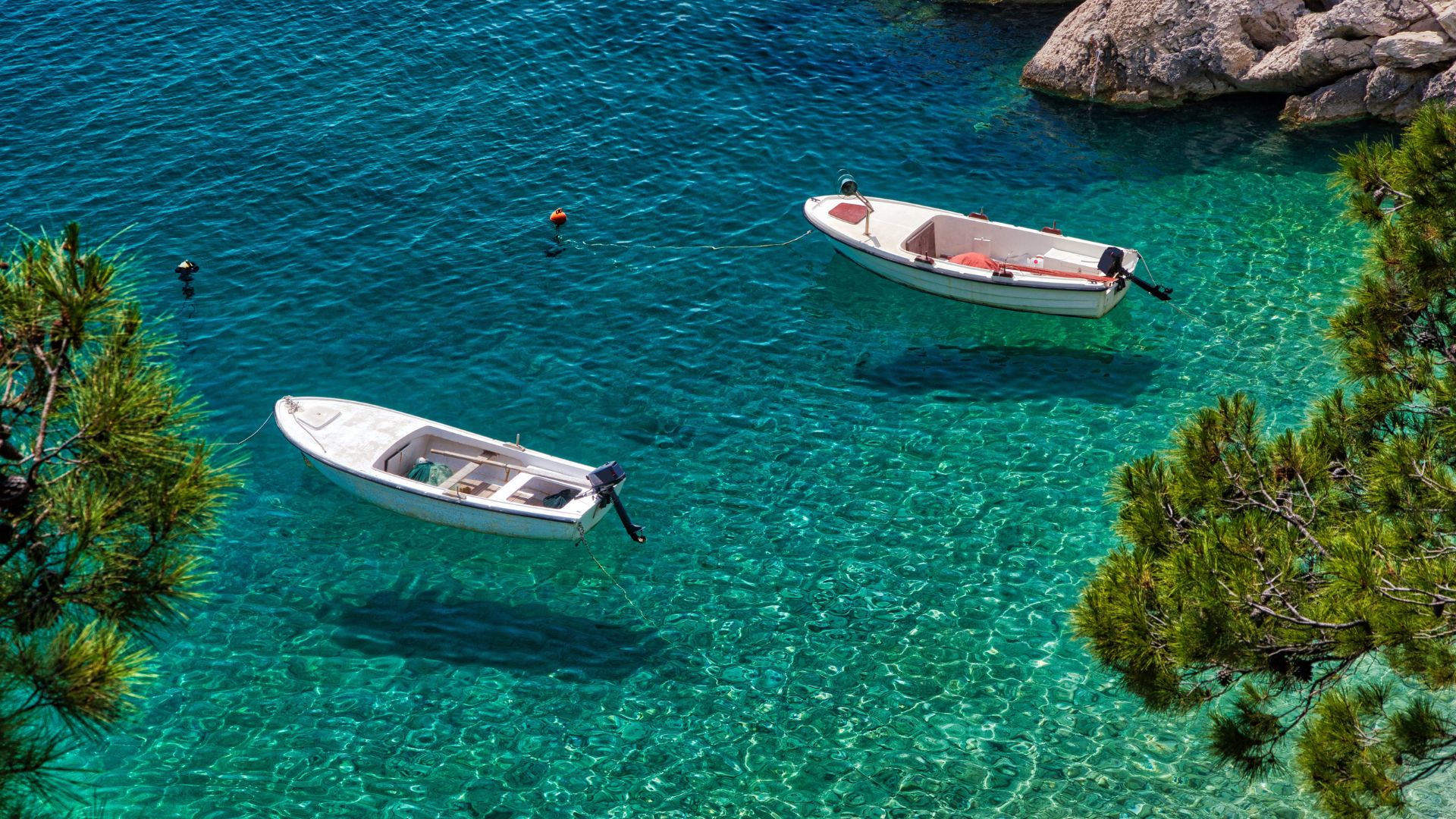
The Adriatic Sea is among the clearest bodies of water in the Mediterranean. It's shallow along the coast, which means the light catches it differently — turquoise in the shallows, deep sapphire further out. Visibility underwater runs to 50 feet on a calm day.
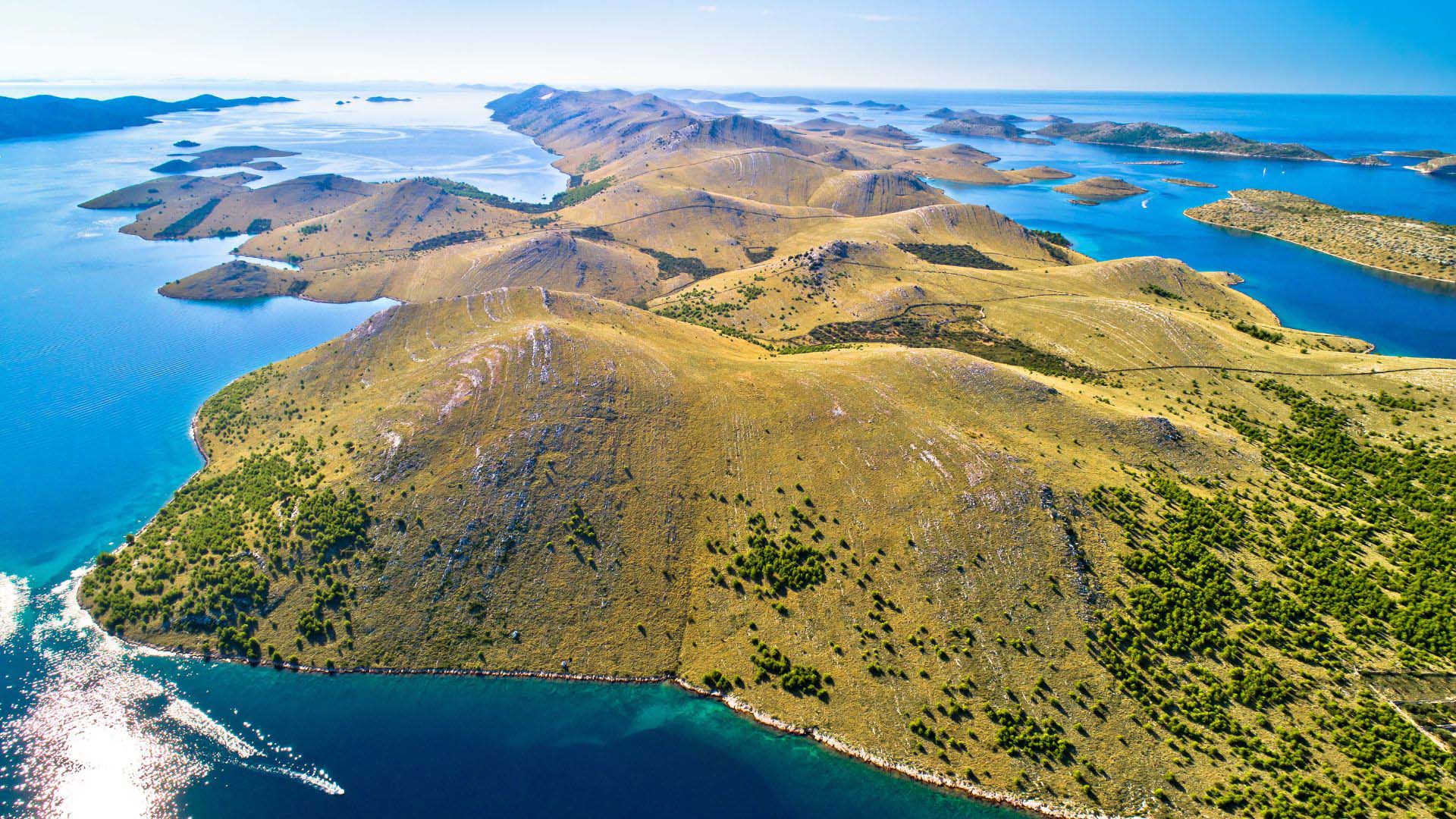
Unlike the more crowded Mediterranean coastlines, large stretches of Croatia's coast remain relatively uncrowded, especially once you leave the most well-known spots. The 1,200-plus islands that dot the Dalmatian Coast mean there is always somewhere to anchor that feels like you found it yourself.
If you've ever been on a boat and wished the water looked the way it does in pictures — Croatia is where it actually does.
The Islands Each Have Their Own Personality
This is what separates Croatia from a typical beach destination. You're not just going to "the beach." You're moving through a collection of distinct worlds.
Hvar — glamorous, sun-drenched, with lavender fields inland and a nightlife scene that surprises people who expected something quieter. Sophisticated without being pretentious, and the old town is genuinely one of the most beautiful in Europe.
Korčula — where the pace drops entirely. Legend holds it as the birthplace of Marco Polo, and the medieval stone town seems to belong to another century. The local wine — Pošip and Grk — is exceptional and almost impossible to find outside Croatia.
Vis — the most remote of the major islands, and therefore the most untouched. It only opened to foreign visitors in 1989, after decades as a Yugoslav military base. That relative isolation preserved something rare: a place that still feels like a place, not a set.
Dubrovnik — the walled city is one of the architectural wonders of Europe. What people don't realize until they're there is how much more there is once you get past the Old Town.
The Food Is a Serious Argument for Coming
Croatian cuisine is Mediterranean in spirit but distinctly its own. Fresh seafood — sea bass, octopus, sea bream — grilled simply and served with local olive oil and herbs. Black risotto made with cuttlefish ink, which sounds alarming and tastes extraordinary. Peka, a traditional slow-cooked dish of meat or seafood buried under a bell-shaped lid and covered in embers. Pag cheese, which rivals any aged cheese in Europe.
The wine regions along the Dalmatian coast produce varietals you've never heard of and will spend time trying to find when you get home. This is the food culture of people who have been eating well for centuries without needing to tell anyone about it.
It's Still Ahead of the Curve — But Not for Long
"Croatia is in that particular moment that every great destination passes through exactly once — where enough people have discovered it to know it's extraordinary, but not enough have arrived to diminish it."
That moment has an expiration date.
The luxury travel market has already identified Croatia as a priority destination. New high-end properties are opening across the islands. Charter demand has been climbing year over year. The travelers who move early get the experience at its purest — before the infrastructure, the crowds, and eventually the prices catch up to the reality.
This is that moment.
The Best Way to See It Is on the Water
There is a reason that the most experienced Croatia travelers consistently say the same thing: you need to do it by boat. The coast reveals itself differently from the water. You reach places that have no road access. You move on your own schedule, stopping where the afternoon light is best, anchoring in a cove that doesn't appear on any tourist map.
A private yacht charter isn't just the most luxurious way to see Croatia — it's genuinely the most complete way. The islands were made to be approached from the sea. That's how people have been arriving for two thousand years.
→ If you're thinking about what a private charter actually looks like, we've broken it down here.
→ And if you want to see what Sirena Collective has planned for the Dalmatian Coast, start here.
A Few Practical Notes Before You Start Planning
Best time to visit: Late May through early October. June and September offer the best balance of weather and crowds. July and August are peak — beautiful, but busier.
Currency: The euro. Croatia joined the eurozone in January 2023.
Language: English is widely spoken throughout tourist areas and the islands.
Getting there: Flights from New York connect through London, Amsterdam, Frankfurt, or Zurich into Split or Dubrovnik. Travel time approximately 12–14 hours.
Getting around: Between islands, ferry or private boat. Split is the best base for the central Dalmatian islands. Dubrovnik anchors the south.
Croatia doesn't need our endorsement. It just needs you to stop sleeping on it.
The Adriatic is clear in a way that makes you want to re-examine your entire vacation history. The food is serious. The islands have personality. And the people who've been there will keep looking at you that way until you finally go.
Go.
Planning a Croatia Charter?
Sirena Collective is curating a private yacht charter along the Dalmatian Coast — vessel, crew, itinerary, and every detail handled. If you want to be first to know when it opens, the conversation starts here.
Inquire with Sirena Collective →Frequently Asked Questions
When is the best time to visit Croatia's Dalmatian Coast?
Late May through early October is the ideal window, with June and September offering the best balance of warm weather and manageable crowds. July and August are peak season — beautiful but busier and more expensive. September in particular is a sweet spot: the sea is still warm, the crowds have thinned, and the light is extraordinary.
Is a private yacht charter the best way to see Croatia?
For the Dalmatian Coast, yes — it is genuinely the most complete way to experience Croatia. The 1,200-plus islands mean there is always somewhere to anchor that is inaccessible by road. A private charter lets you move on your own schedule, reach secluded coves, and experience each island without the constraints of ferry timetables or shared itineraries.
Do I need a visa to visit Croatia?
US citizens do not need a visa for stays of up to 90 days in Croatia. Croatia joined the Schengen Area in January 2023, so your 90-day allowance is shared across all Schengen countries. Check current entry requirements with your travel advisor or the Croatian embassy before departure.
What currency does Croatia use?
Croatia adopted the euro in January 2023. Cards are widely accepted throughout the islands and tourist areas. Cash is useful for smaller markets and some local restaurants, particularly on the smaller islands.
How do I get from New York to Croatia?
Flights from New York connect through major European hubs — typically London, Amsterdam, Frankfurt, or Zurich — with the final leg into Split or Dubrovnik. Total travel time is roughly 12–14 hours depending on your connection. Split is the better gateway for exploring the central Dalmatian islands; Dubrovnik anchors the southern end of the coast.
Can Sirena Collective arrange a private yacht charter in Croatia?
Yes. Sirena Collective specializes in private yacht charters along the Dalmatian Coast — vessel selection, crew, itinerary, and every detail from embarkation to the last evening at anchor. Our advisory service is always complimentary. Contact us to begin planning your voyage.