
My husband turned to me somewhere outside Baku, standing in front of rock carvings that are 40,000 years old, and said: "We learned nothing in school." He wasn't wrong. Nothing — not a single class, not a single book — had prepared us for what the South Caucasus actually is.
We are both international relations majors. We have traveled extensively. We consider ourselves reasonably well-informed about the world and its history. And yet this region sits at the oldest crossroads of human civilization. The history here doesn't just predate what we were taught. It predates the framework we use to understand history itself.
This is the post I wish my husband had read before we went. It would have saved him from standing in stunned silence in approximately seven different museums.
Azerbaijan: The Land of Fire
Azerbaijan calls itself the Land of Fire — and this is not marketing. It is geology, and it is theology. Natural gas vents have burned from the ground here for millennia. The ancient Persians built fire temples over them. Zoroastrians — followers of one of the world's oldest monotheistic religions — made pilgrimages here for centuries. Azerbaijan's very name derives directly from its Zoroastrian history: Land of the Eternal Fire.
Before we went, we thought of Azerbaijan as a post-Soviet Muslim country on the Caspian Sea. What we found was a civilization that had absorbed and outlasted every empire that tried to claim it — Persian, Ottoman, Russian, Soviet — while somehow maintaining a thread of cultural continuity that stretches back to the Stone Age.
Gobustan: 40,000 Years of Human Story
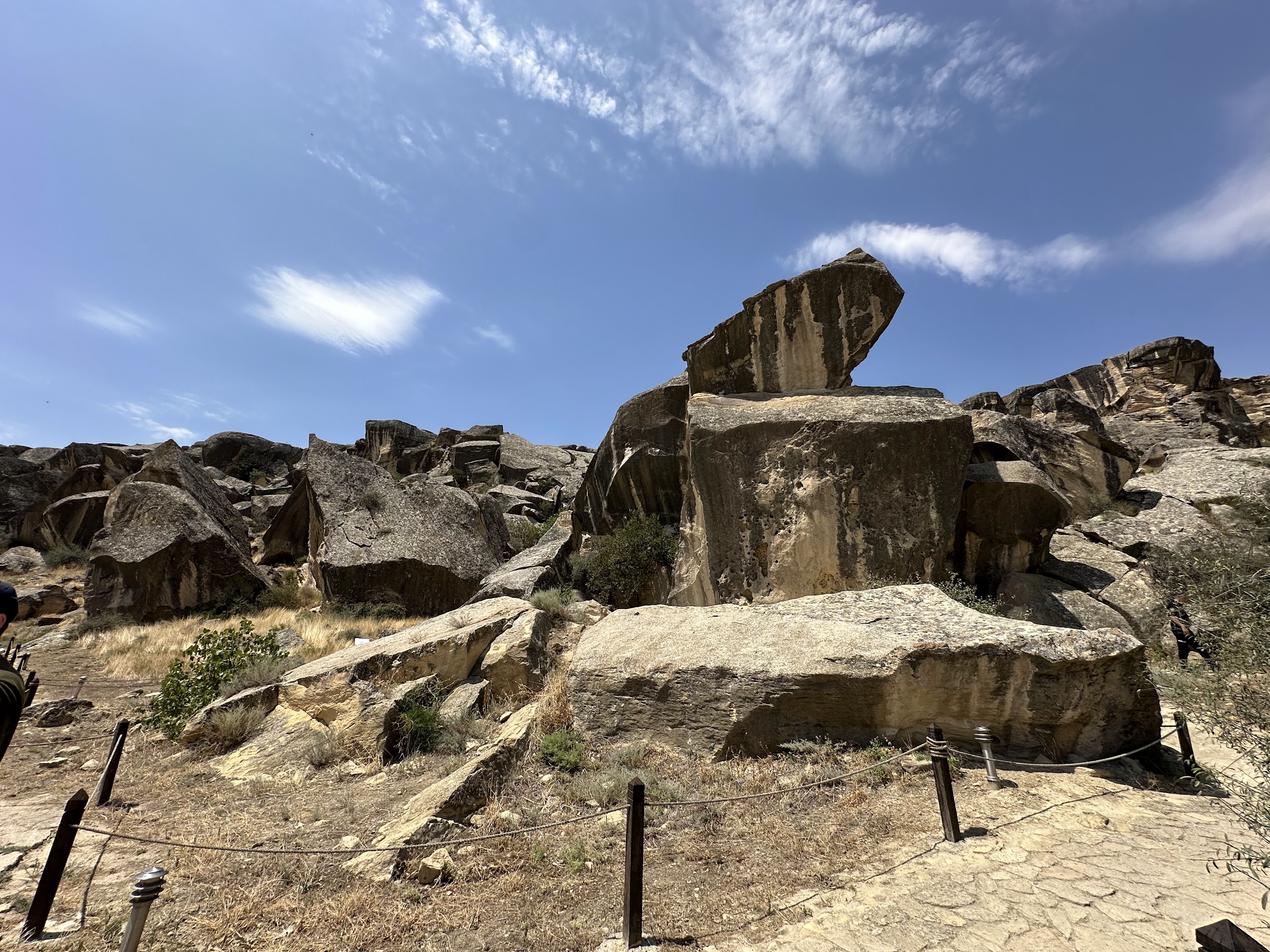
About 60 kilometers southwest of Baku, rising out of a semi-desert landscape, is one of the most extraordinary places we have ever visited. Gobustan Rock Art Cultural Landscape covers three areas of a rocky plateau bearing testimony to 40,000 years of rock art — more than 6,000 engravings depicting scenes of daily life, hunting, animals, boats, dances, and camel caravans. UNESCO World Heritage Site since 2007.
Standing in front of these carvings with our three children, we tried to do the math. Forty thousand years ago, human beings stood in this exact spot and pressed images into stone. Our 8-year-old asked who made them. We said: people, a very long time ago. He asked how long. We said: longer ago than you can imagine. He thought about that for a while.
You cannot reach Gobustan without private transportation. Hiring a van with a guide pays for itself completely here — the geological and historical context of what you're seeing requires explanation to fully land.
Ateshgah: Where Three Religions Came to Worship Fire
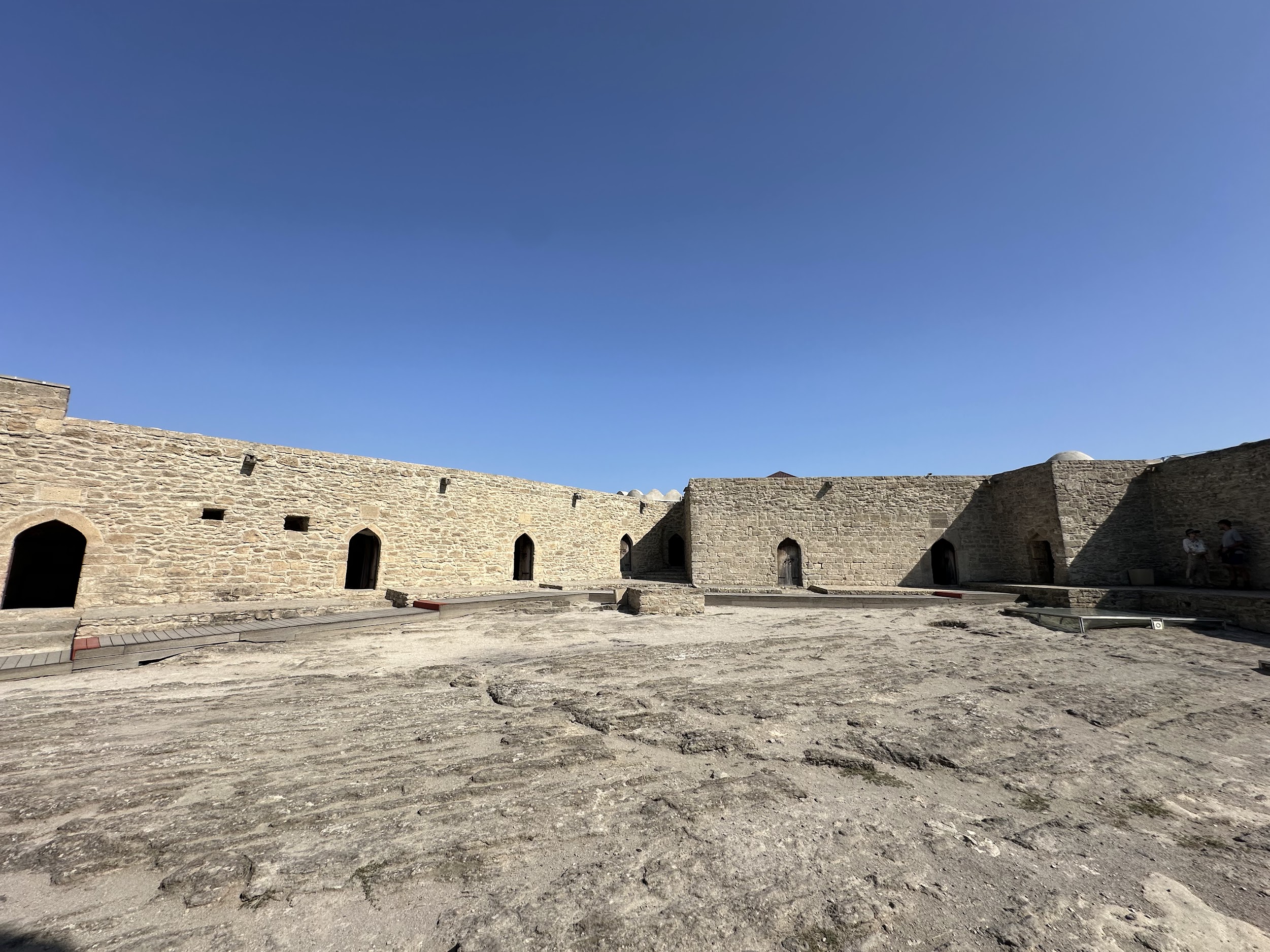
Twenty-one kilometers east of Baku sits the Ateshgah Fire Temple — and it is unlike any religious site we have visited anywhere in the world. Located on a natural gas vent, Ateshgah became a site of pilgrimage for Hindus, Sikhs, and Zoroastrians. Three completely distinct religious traditions all independently recognized this place as sacred. The temple courtyard contains Sanskrit and Punjabi inscriptions alongside Persian ones — a physical record of the ancient Silk Road, of traders and pilgrims crossing continents, of different faiths finding meaning in the same eternal flame.
My husband stood in the courtyard for a very long time.
Baku's Old City: Layers of Empire
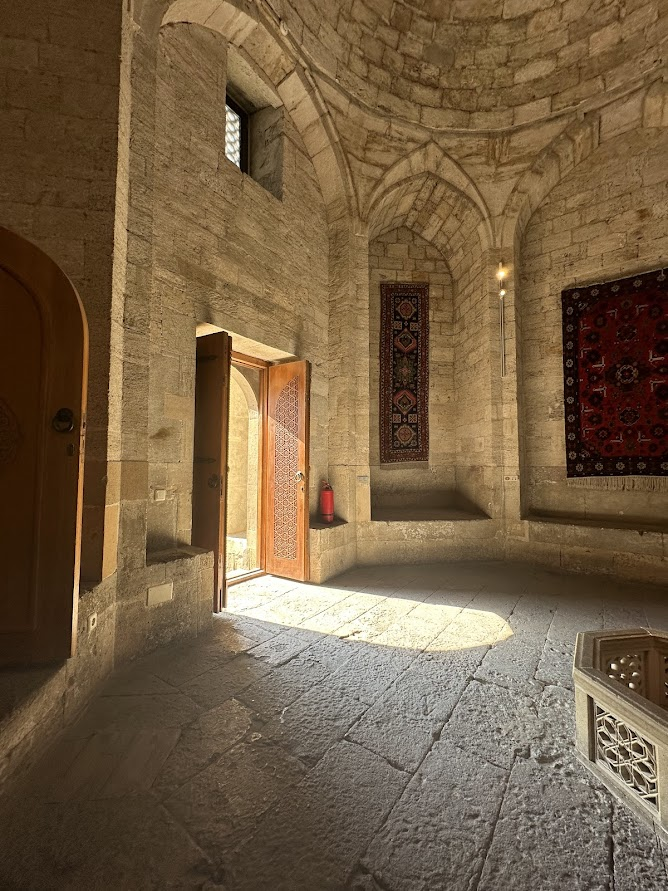
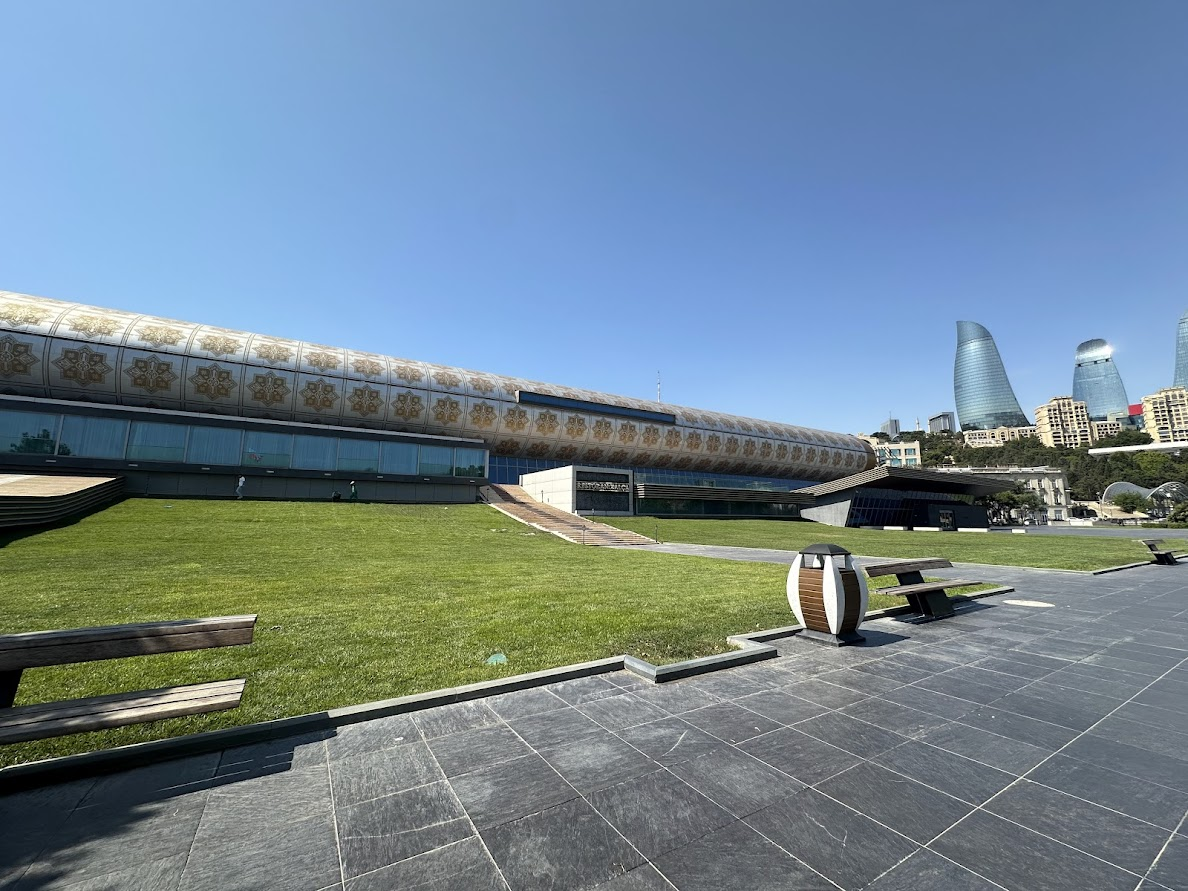
The Maiden Tower, the Palace of the Shirvanshahs, the winding alleys of Icherisheher — Baku's UNESCO-listed old city is a place where architecture itself tells the story of overlapping empires. The Azerbaijan National Museum of History gives essential context before you explore. The Carpet Museum — housed in a building shaped like a rolled carpet, which our kids announced loudly and publicly — is genuinely world-class.
Georgia: Where Empires Collide and Wine Was Invented
Georgia sits at the junction of Europe and Asia. Every major empire has either passed through, invaded, or tried to claim it. That history is written into the landscape.
Uplistsikhe: A City Carved from Rock
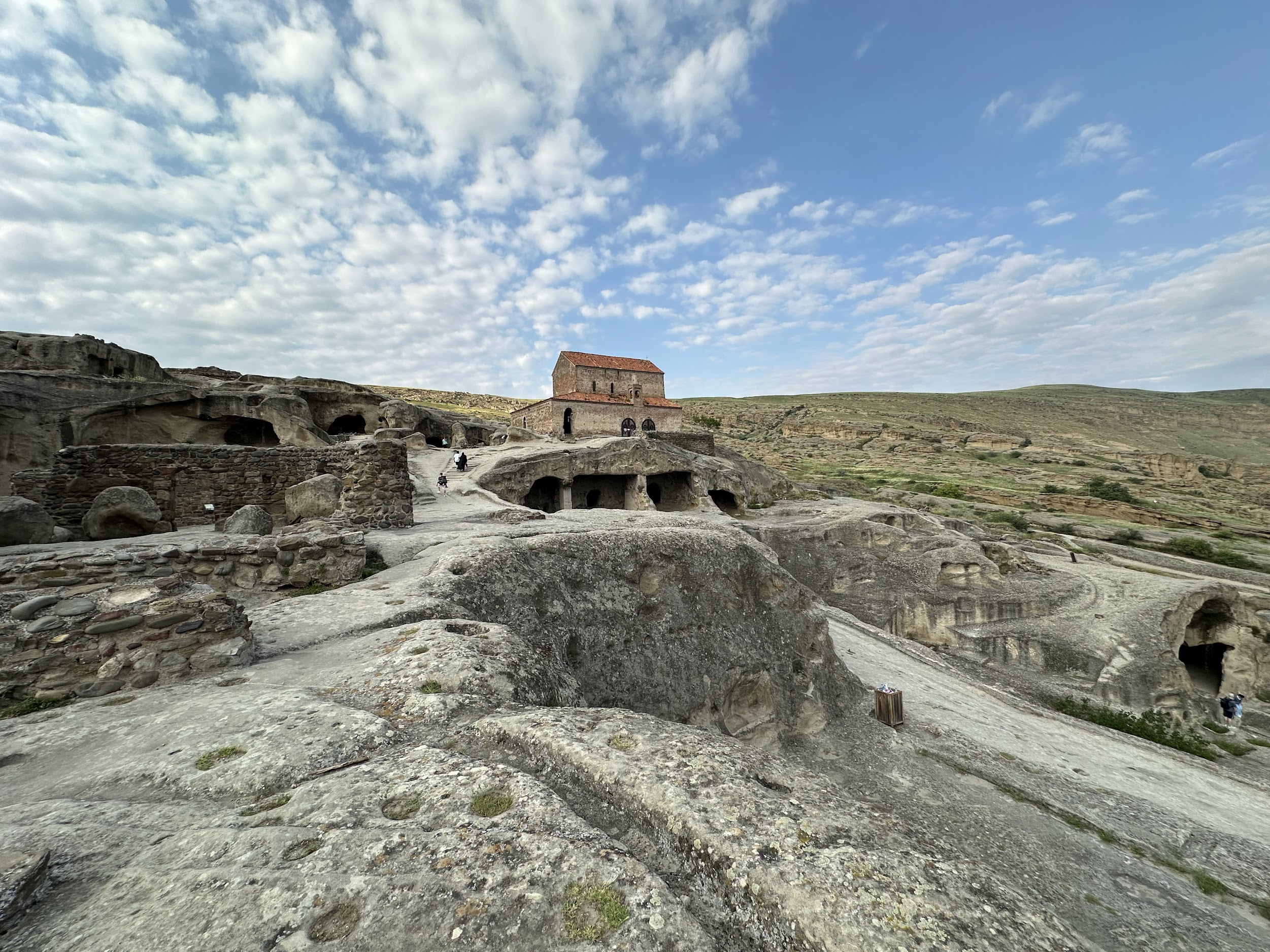
Uplistsikhe — an ancient cave city carved into rock, some chambers dating back 3,000 years — is one of the most otherworldly places we have ever visited. Our children ran through the tunnels. We tried to absorb what we were seeing. It sits on a hill above a river and in the right light looks like something from another planet.
Ananuri Fortress: Where Beauty Meets History
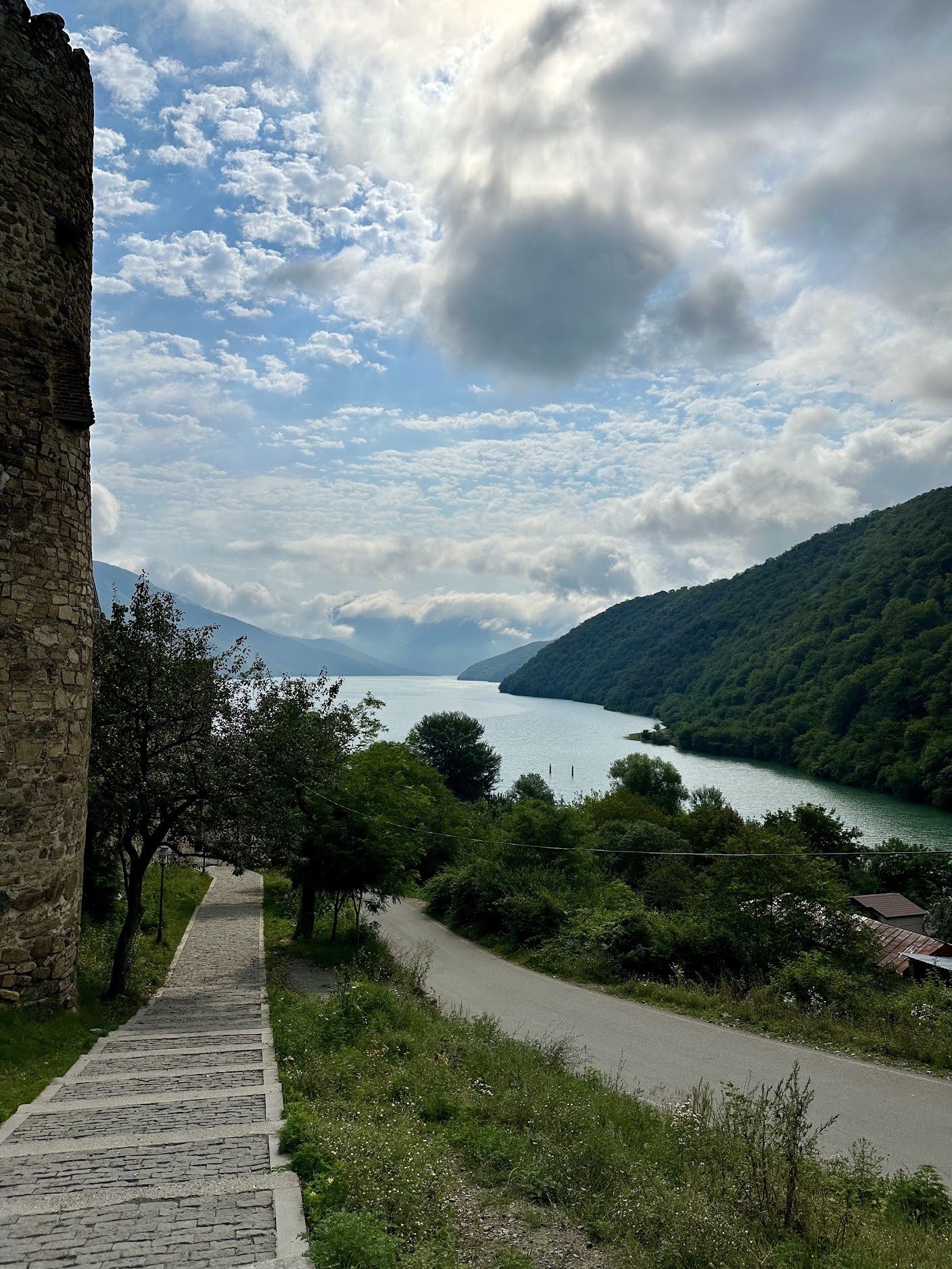
Ananuri Fortress reflected in the turquoise waters of the Zhinvali Reservoir is one of those views that seems too beautiful to be real. We stopped the van. Nobody said anything for a while.
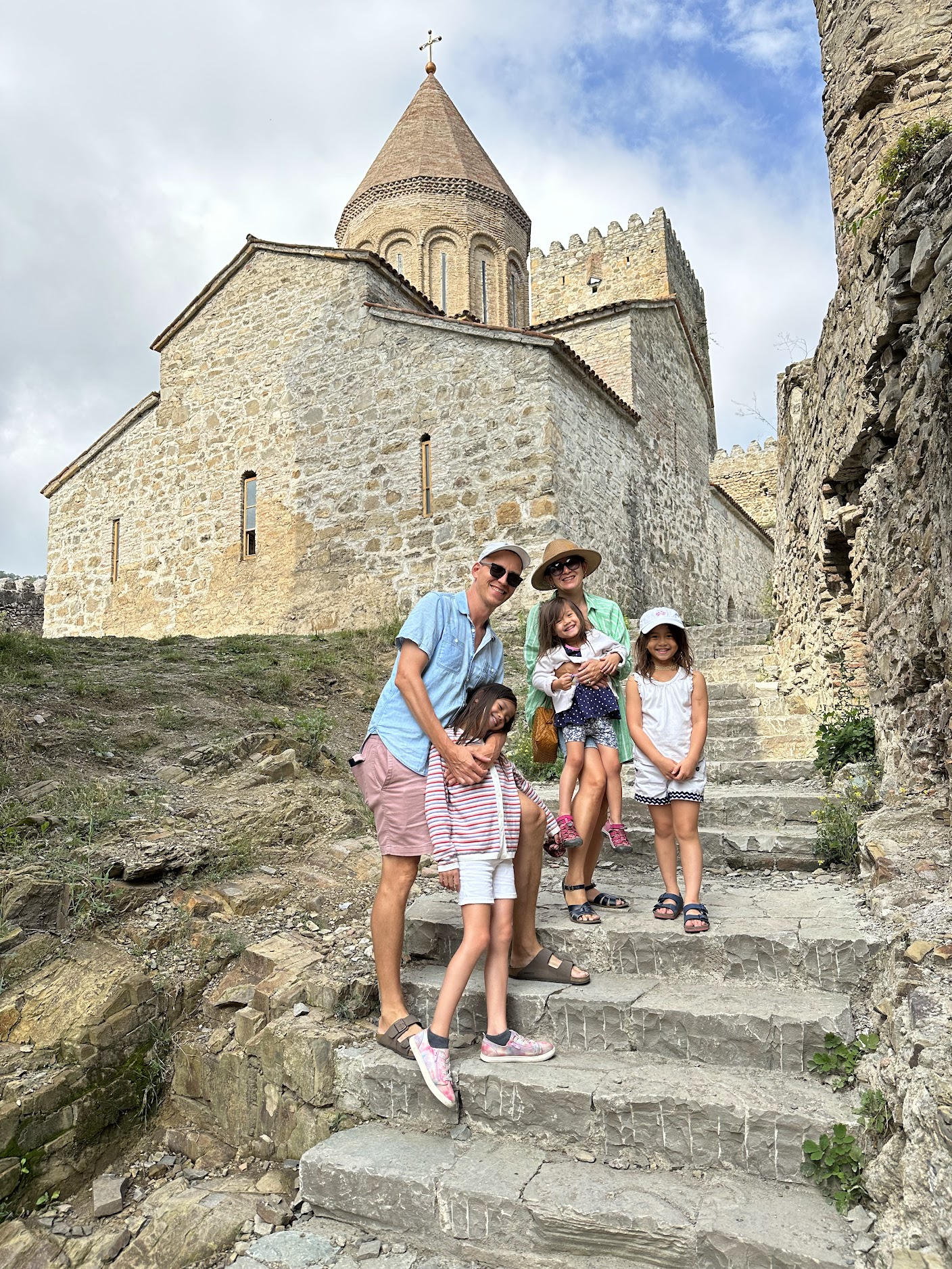
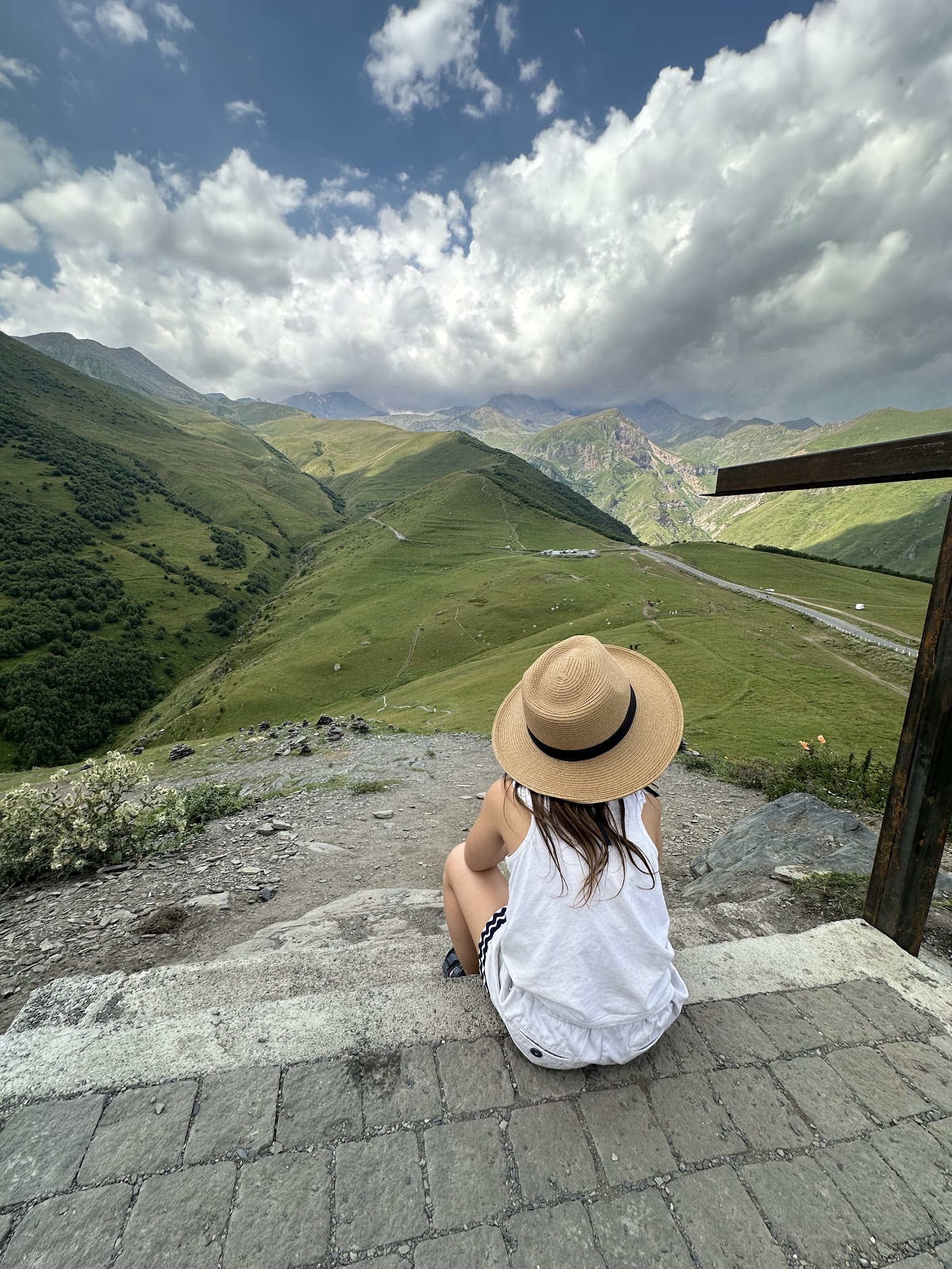
Georgia's relationship with Russia — including a 2008 war still within living memory — is present in how Georgians talk about their history. We even went to Stalin's birthplace. A good guide makes this context comprehensible and nuanced. Without that context, you see impressive ruins. With it, you understand what those ruins mean.
Georgia is one of the world's oldest wine regions — evidence of winemaking here dates back 8,000 years. We had a bottle every evening. None were disappointing.
Armenia: The Oldest Christian Nation on Earth
Armenia adopted Christianity as its state religion in 301 AD. But the history here stretches back much further than that.
Garni Temple: Rome Reached Further Than You Think
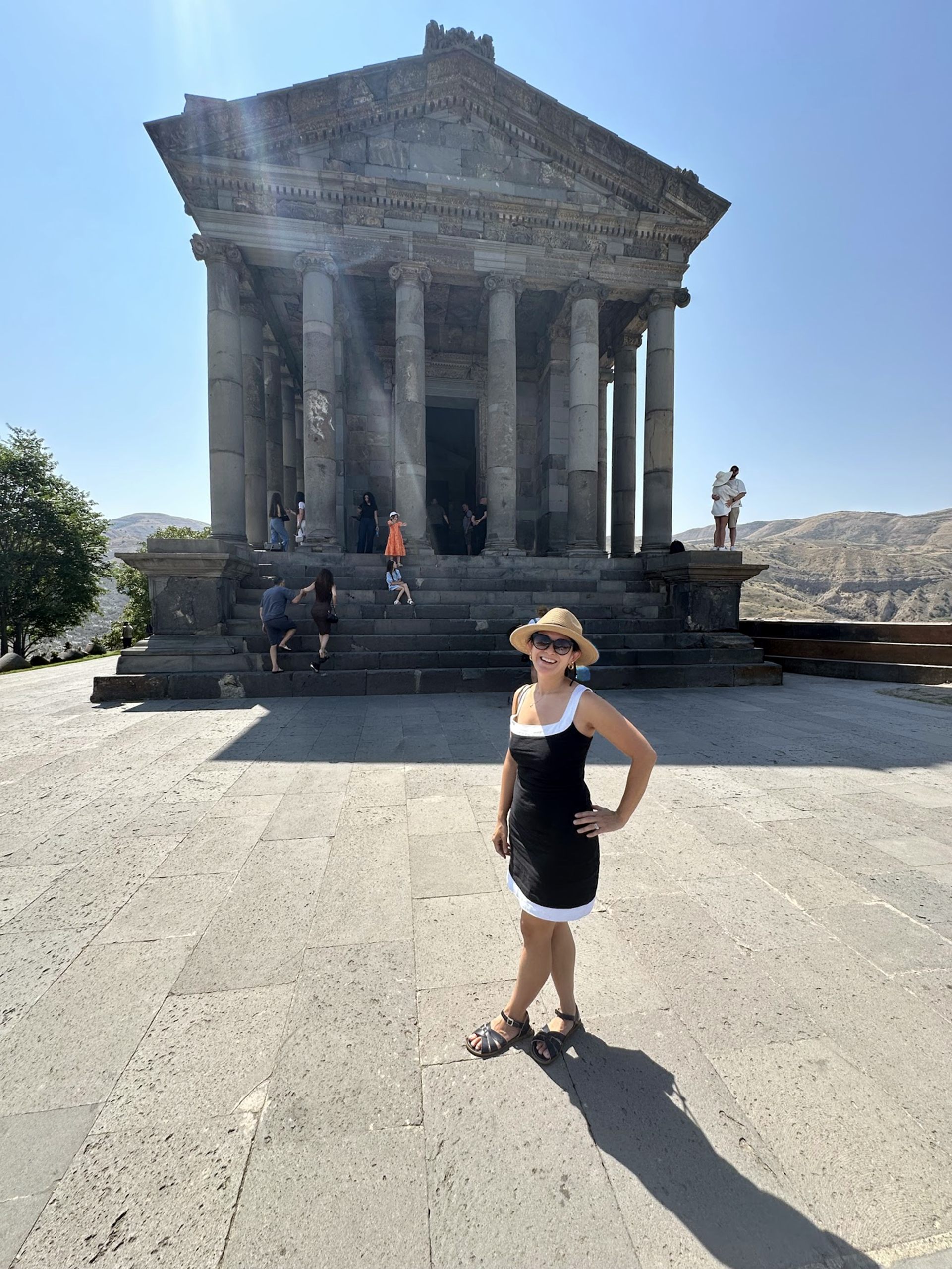
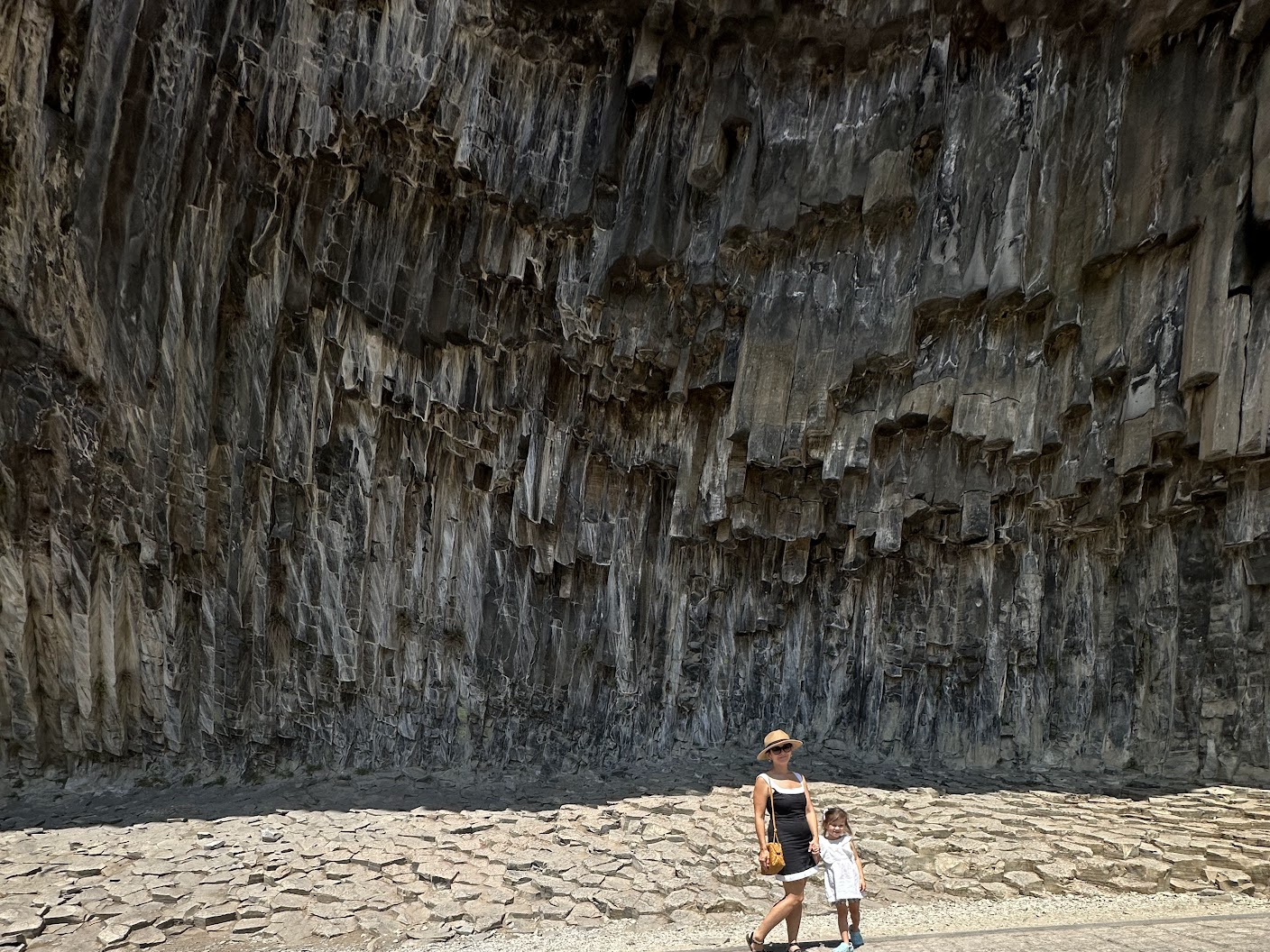
The Garni Temple — a perfectly preserved Greco-Roman temple built in the 1st century AD — stands on a cliff above a river gorge. The Romans were here. The ancient world reached much further east than most of us were taught. The Symphony of Stones nearby — a natural basalt column formation that resembles a massive pipe organ emerging from the earth — left our kids completely astonished.
Geghard Monastery: Carved from the Living Rock
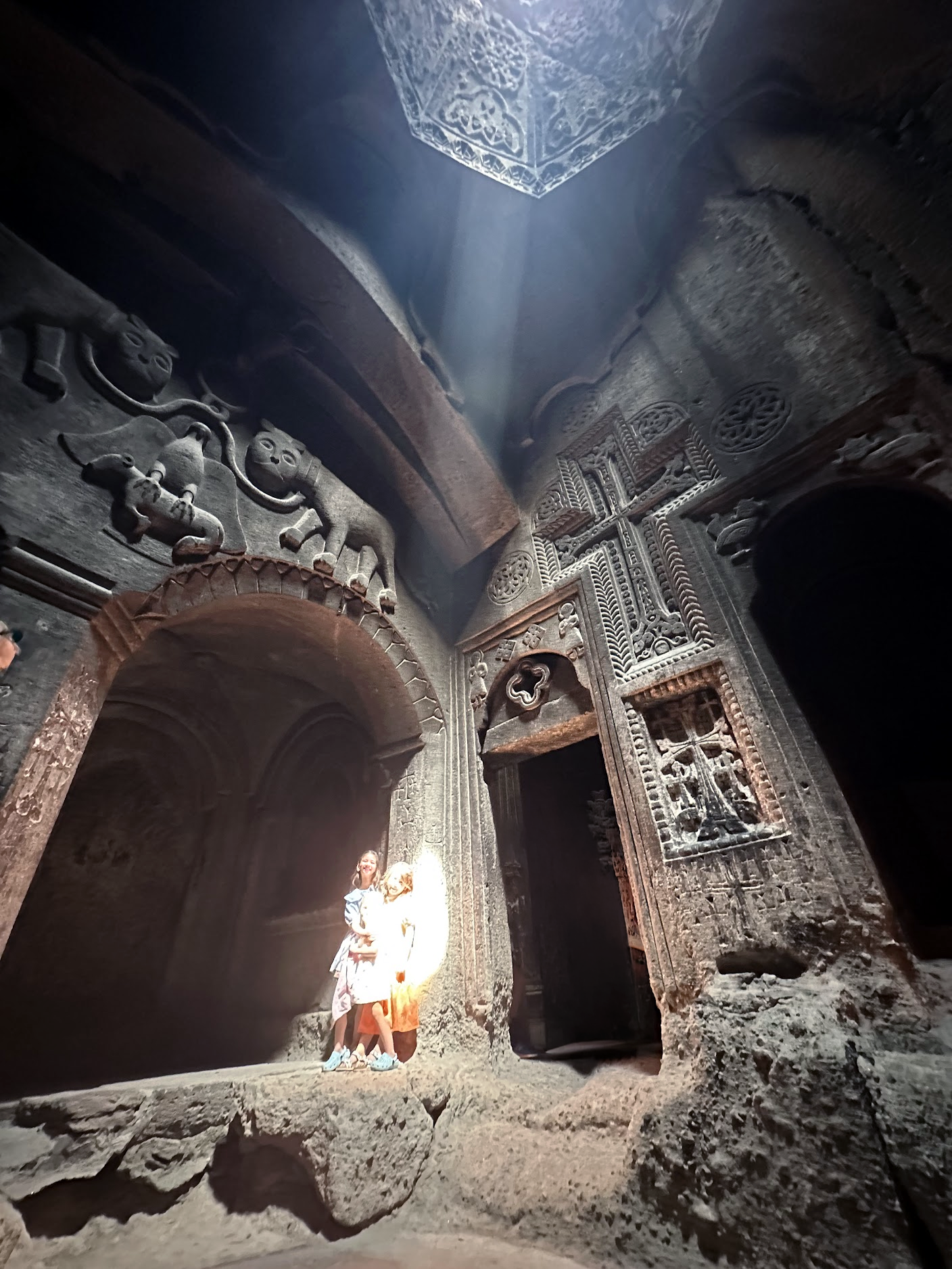
Geghard Monastery, carved partially into a cliff face, contains chambers of extraordinary acoustic resonance. The silence inside, broken only by prayer or song, is something we still talk about. The setting alone — surrounded by dramatic rock formations — is worth the visit even before you step inside. Combine Garni and Geghard in one day. They are 10 minutes apart and complement each other completely.
Sevanavank: The Monastery on the Lake
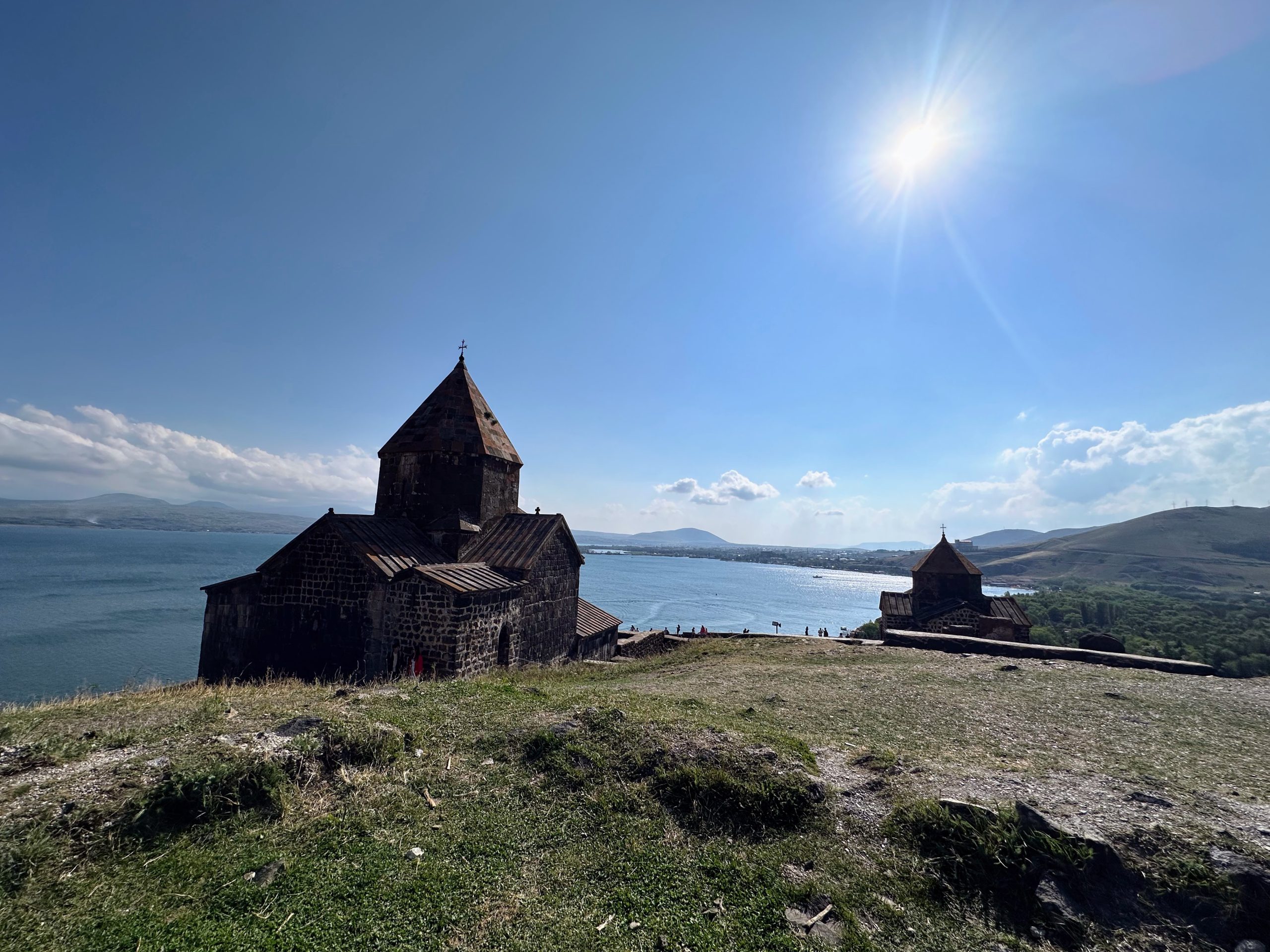
Sevanavank monastery on Lake Sevan — one of the world's largest high-altitude freshwater lakes — offered perhaps the most dramatic setting of any site on the entire trip. The drive from Yerevan takes about an hour and a half. Pack a picnic. The afternoon light on the water is something else entirely.
The Museums: Every Country Tells a Different Story
This was the most intellectually fascinating aspect of the trip for two IR majors. Each country's museums present their version of regional history with full confidence. The Azerbaijani museum tells one story. The Armenian museum tells another. The Georgian museum tells a third. All three are drawing on real history. All three are making choices about what to emphasize.
The History Museum of Armenia in Republic Square is one of the finest museums we visited anywhere on the trip. The staff are attentive. You follow a designated path. Understanding what Armenia has survived — invasions, genocide, Soviet occupation, territorial conflict — makes the museum's curatorial approach deeply meaningful. Plan at least two hours.
The contrast between museums is the point. Visit all three countries. The single-country version of this trip misses something fundamental — and it misses it completely.
Frequently Asked Questions
What ancient sites can you visit in Azerbaijan?
Azerbaijan's most significant ancient sites include Gobustan Rock Art Cultural Landscape (40,000-year-old engravings, UNESCO World Heritage), the Ateshgah Fire Temple where Zoroastrian, Hindu, and Sikh pilgrims worshipped the same eternal flame, and the Palace of the Shirvanshahs in Baku's UNESCO-listed old city. All require private transportation to visit properly.
What is Zoroastrianism and why is it important in Azerbaijan?
Zoroastrianism is one of the world's oldest monotheistic religions, predating Christianity and Islam. Azerbaijan's natural gas vents have burned from the ground for millennia, making it a sacred site for Zoroastrian pilgrimage. The Ateshgah Fire Temple was built over one of these natural vents. Azerbaijan's very name derives from its Zoroastrian history — Land of the Eternal Fire.
What are the best historical sites in Armenia?
Armenia's most extraordinary historical sites include Garni Temple (a perfectly preserved Greco-Roman temple from the 1st century AD), Geghard Monastery (partially carved into a cliff face, UNESCO World Heritage), Sevanavank Monastery on Lake Sevan, and the History Museum of Armenia in Yerevan. Garni and Geghard are typically visited together as they are 10 minutes apart.
Why do the museums in Georgia, Armenia, and Azerbaijan tell different versions of history?
The South Caucasus has been contested territory for thousands of years — fought over by Persian, Ottoman, Russian, and Soviet empires, and subject to ongoing territorial disputes including the 2020 Nagorno-Karabakh conflict. Each country's museums present their version of regional history with full confidence. Visiting all three countries makes this contrast the point — and exponentially enriches the experience.
Ready to Plan Your South Caucasus Journey?
The South Caucasus will make you feel, in the best possible way, that you knew very little about the world. That is not a comfortable feeling. It is an important one — and we can help you plan an itinerary worthy of the destination.
We are compensated by our supplier partners — which means our guidance costs you nothing, and our incentive is always your best possible experience.
Plan Your Journey →