
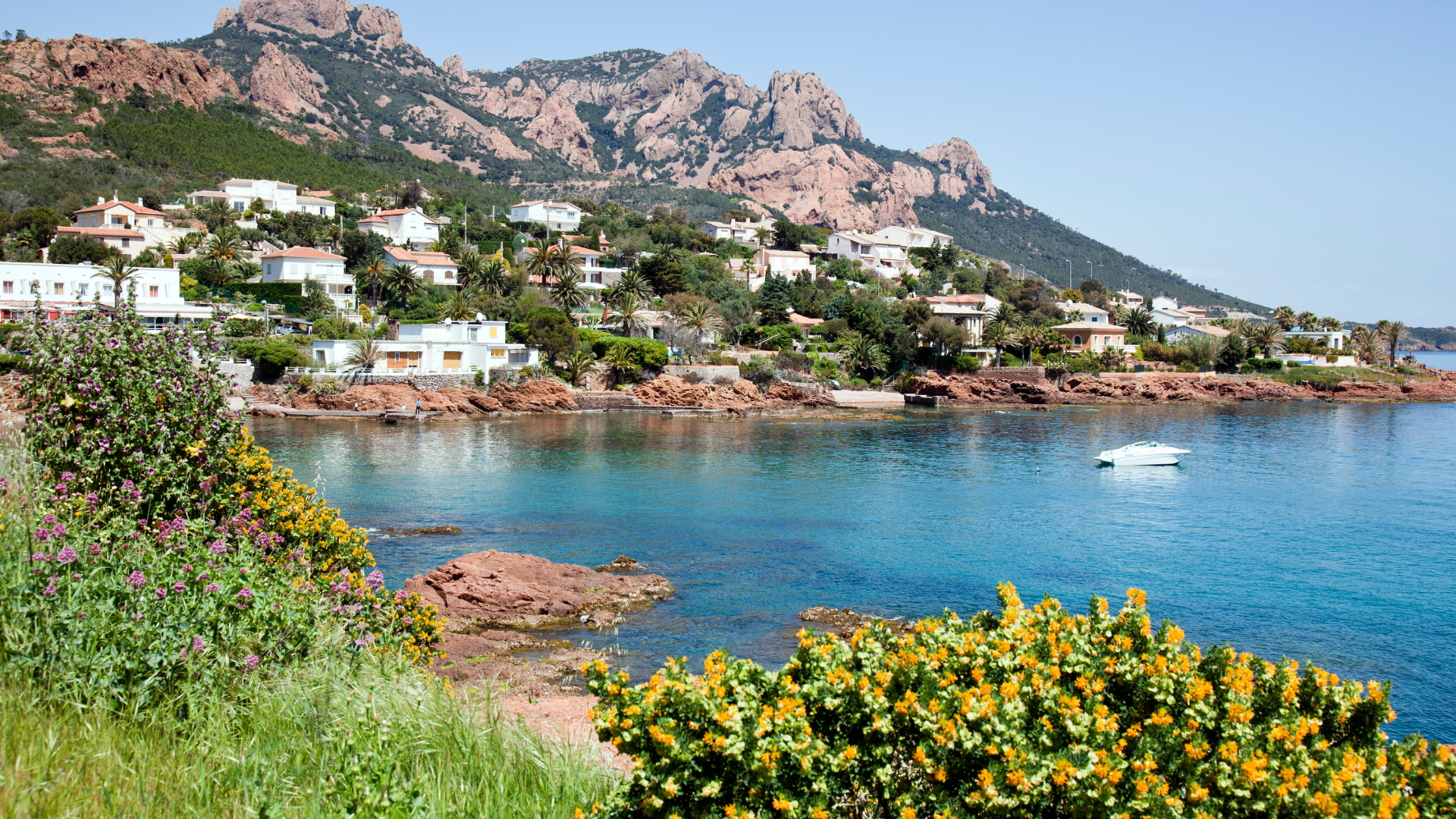
There are destinations you visit, and then there are destinations that get under your skin. The French Riviera — or the Côte d’Azur, as the French prefer — is firmly in the second category. From the moment the light hits the Mediterranean and turns it that impossible shade of blue, you understand why artists, royalty, and the world’s most discerning travelers have been returning here for over a century.
I haven’t just researched the Riviera — I’ve mapped it, argued about it, and built dozens of itineraries around it for clients whose standards are exacting and whose time is limited. When they come back raving about a morning market in Vieux-Nice or a monk’s wine on Île Saint-Honorat, that’s how I know the research was right.
What follows is not a listicle. It is the guide I give clients who ask me how to do the French Riviera properly — which hotels, which towns, which months, and what not to miss. Learn more about how we work and what Sirena Collective brings to a trip like this.
Why the French Riviera Belongs on Your Travel List
The Côte d’Azur stretches roughly 115 miles along the Mediterranean coastline, from the Italian border in the east to Toulon in the west. It encompasses some of the most famous names in travel — Nice, Cannes, Monaco, Saint-Tropez, Antibes — each with its own distinct personality, its own rhythm, its own reason to linger.
This is not a beach destination. Or rather, it is — but reducing it to that is like saying Paris is just good for shopping. The French Riviera is a full sensory experience: the lavender-scented markets, the rosé served ice-cold at beach clubs where the water laps just feet from your table, the sound of a language that seems designed to make everything sound more beautiful than it already is.
It is also, increasingly, one of the world’s great cruise destinations — and a port worth extending your stay for. The French Riviera rewards those who slow down.
The Essential Stops
Nice — The Capital of Cool
Nice is the unofficial capital of the Riviera and, in my research, one of the most underrated cities in Europe. The Promenade des Anglais along the seafront is iconic, but the real Nice lives in the old town — Vieux-Nice — where the baroque architecture, the morning markets, and the Niçoise cuisine give you something that feels genuinely, authentically French.
The socca — a chickpea pancake cooked in a wood-fired oven — is the thing to eat. Every client I’ve sent to Nice comes back asking how to recreate it at home. The answer is that you can’t, quite. That’s part of why they go back.
Don’t miss: The Cours Saleya flower and food market, Tuesday through Sunday mornings. The Musée Matisse, which sits beautifully in a 17th-century villa. And a glass of local Bellet wine at sunset — it’s only produced in the hills above Nice and almost impossible to find outside the region.
Cannes — More Than a Film Festival
Cannes has a reputation problem — people assume it’s only interesting in May during the Film Festival. They’re wrong. Cannes is one of the most beautifully maintained towns on the Riviera, with La Croisette, excellent restaurants, and easy access to the Îles de Lérins — two small islands just 15 minutes by boat that feel like they belong to another century.
The clients I’ve planned Cannes itineraries for consistently report that the islands are the highlight — not the town. Which tells you something about the value of knowing what to prioritize.
Don’t miss: A day trip to Île Saint-Honorat, where Cistercian monks have been making wine since the 5th century. The wine is extraordinary and can only be purchased on the island — which makes it one of the most genuinely exclusive souvenirs on the entire Riviera.
Monaco — One Square Mile of Maximum
Monaco is the smallest country in the world — one square mile, 39,000 residents, more Michelin stars per capita than almost anywhere on earth. It is unapologetically opulent, and I mean that as a compliment. The Grand Prix circuit winds through the actual streets. The Casino de Monte-Carlo is as dramatic as you imagine. And the views from the Rock — the old town perched above the harbor — are among the best on the entire Riviera.
Don’t miss: The Oceanographic Museum, founded by Prince Albert I in 1910, sitting dramatically on a clifftop above the Mediterranean. And have at least one drink at the Bar Américain inside the Hôtel de Paris. Worth every euro — and worth dressing for.
Saint-Tropez — The Real Thing
Saint-Tropez gets a bad reputation for being overrun and overhyped. It can be — in August, it’s genuinely chaotic. But visit in June, September, or October, and you’ll find one of the most charming, authentically Provençal towns on the coast. The old port, the Place des Lices market on Tuesday and Saturday mornings, the Musée de l’Annonciade with its extraordinary Fauvist collection — this is the Saint-Tropez that Brigitte Bardot fell in love with in the 1950s. It still exists.
The timing advice here is not incidental — it is the single most impactful planning decision you will make for this part of the Riviera. August Saint-Tropez and September Saint-Tropez are effectively different destinations.
Don’t miss: Renting a bicycle and cycling to Plage de Pampelonne — the legendary beach that stretches for three miles south of town. Club 55 is the classic choice; Bagatelle is more energetic. Both are worth experiencing at least once.
Where to Stay
The French Riviera has accommodation at every level, but since we’re talking about doing this properly — here are the properties I consistently recommend to clients with exacting standards:
Grand-Hôtel du Cap-Ferrat
Saint-Jean-Cap-Ferrat · Four SeasonsPossibly the most beautiful hotel on the entire Riviera. A Belle Époque palace surrounded by gardens, with a seawater pool carved into the rocks. The standard here is exceptional even by Four Seasons standards. Worth saving for — and worth arriving a day early to fully settle in.
Hôtel du Cap-Eden-Roc
Antibes · Oetker CollectionLegendary. F. Scott Fitzgerald wrote about it. The list of guests over the past century reads like a who’s who of 20th-century culture. Still extraordinary — and still cash only, which tells you something about how seriously they take their own mythology.
La Réserve de Beaulieu
Beaulieu-sur-MerSmaller, quieter, and in my research the most romantic hotel on the coast. Intimate, pink, and utterly perfect for couples celebrating something significant. The dining here is exceptional.
Château de la Chèvre d’Or
Èze VillageA medieval village perched 1,400 feet above the sea, converted into a hotel. The views are simply unreal — a 180-degree panorama of the Mediterranean that photographs cannot do justice to. Clients who stay here consistently name it the single most memorable night of any trip.
Arriving by Luxury Cruise
The French Riviera is one of the Mediterranean’s finest cruise destinations — and several of the world’s top luxury lines include it on their itineraries. The Ritz-Carlton Yacht Collection calls at both Cannes and Monte Carlo on their Mediterranean sailings, making the Riviera one of the most glamorous port stops on their route.
If you’re arriving by ship into Villefranche-sur-Mer, you’re ideally positioned — Nice is 20 minutes east, Monaco is 20 minutes west. If you’re docking in Cannes, the old port puts you right in the heart of things.
Because luxury yacht voyages like the Ritz-Carlton and Four Seasons Yacht operate on à la carte dining models, we recommend mapping out your onboard reservations before you board. Our real-world breakdown of the Four Seasons Yacht Terrasse menu and prices gives you a clear picture of what to expect.
My strong advice: if you have even one extra day, stay. Book a night before or after your cruise. The Riviera is not a one-day destination — it is a place that rewards those who linger. Almost every client who has extended their stay has told me it was the best decision they made.
Practical Tips From Someone Who’s Done the Research
May, June, and September are the sweet spots — warm enough to swim, calm enough to breathe. July and August are peak season: beautiful, busy, and expensive. October is an underrated gem.
The coastal train between Nice, Monaco, and Menton is excellent and scenic. Rent a car for inland exploration. For Saint-Tropez in summer, boat beats road. Private transfers are widely available.
Make the effort. A simple bonjour and merci before switching to English goes a long way on the Riviera. The French notice, and they appreciate it more than you’d expect.
The Riviera has a clear dress register — put-together during the day, elegant in the evening. Our luxury travel packing guide covers exactly what to bring.
Splurge on accommodation and one exceptional meal. A walk through Vieux-Nice, a market morning in Saint-Tropez, a coastal train ride — these cost almost nothing and deliver everything.
My full insider’s guide — including day-by-day itinerary ideas and restaurant picks — is published on Fora’s advisor platform for those who want the extended version.
Frequently Asked Questions
When is the best time to visit the French Riviera?
May, June, and September are the sweet spots — warm enough to swim, calm enough to breathe. July and August are peak season: beautiful, busy, and expensive. October is an underrated gem with excellent weather, fewer crowds, and lower prices across accommodation and restaurants.
What are the best luxury hotels on the French Riviera?
The Grand-Hôtel du Cap-Ferrat in Saint-Jean-Cap-Ferrat is widely considered the finest hotel on the Riviera. Hôtel du Cap-Eden-Roc in Antibes is legendary. La Réserve de Beaulieu is the most romantic. Château de la Chèvre d’Or in Èze offers the most extraordinary views — 1,400 feet above the Mediterranean.
Is the French Riviera a good cruise destination?
Yes — one of the Mediterranean’s finest. Luxury lines including the Ritz-Carlton Yacht Collection call at Cannes and Monte Carlo. If arriving by ship into Villefranche-sur-Mer, Nice is 20 minutes east and Monaco 20 minutes west. Always try to extend your stay by at least one night — the Riviera rewards those who linger.
What is the difference between Nice, Cannes, Monaco, and Saint-Tropez?
Nice is the authentic urban capital — markets, museums, local cuisine, Niçoise identity. Cannes is refined and elegant with excellent access to the Îles de Lérins. Monaco is compact, opulent, and extraordinary — one square mile of maximum. Saint-Tropez is the most Provençal and charming, best visited outside July and August.
How do I get around the French Riviera?
The coastal train between Nice, Monaco, and Menton is excellent, scenic, and inexpensive. Rent a car for inland exploration, but expect narrow roads. For Saint-Tropez in summer, boat often beats road. Private transfers are widely available for luxury travelers and worth arranging in advance.
Ready to Plan Your French Riviera Experience?
Whether you’re planning a standalone Riviera journey or extending a Mediterranean cruise — we’ll build something around exactly what you want to feel. Tell us the occasion, the style, and when. We’ll handle everything else.
We are compensated by our supplier partners — which means our guidance costs you nothing, and our incentive is always your best possible experience. Plan Your Journey →Arriving by Cruise or Yacht?
If the French Riviera is on your cruise itinerary — or if you’re considering a luxury Mediterranean sailing — our dedicated cruise inquiry form is the place to start. As Preferred Partners with the Ritz-Carlton Yacht Collection and Four Seasons Yachts, we add amenities that aren’t available when you book direct.
Plan Your Cruise →